Baby swimming is a growing trend among parents in Singapore. Many wonder: is it truly safe, and when should you start? This guide answers your questions with research-backed facts. We also break down the different types of baby swimming classes by age group. Whether your newborn is 6 weeks or 6 months, there is a programme suited for them.
What Does Research Say About Baby Swimming?
Studies consistently show that early water exposure benefits infants in multiple ways. The American Academy of Pediatrics (AAP) updated its guidance in 2010, stating water familiarisation can begin from 1 year, but many supervised aqua programmes safely start earlier.
A 2009 study by Sigmundsson & Hopkins found that infant swimming improves motor development. Babies who swim regularly show better balance and coordination as toddlers.
Research from the Norwegian University of Science and Technology also found that baby swimmers scored higher in motor skills. They also showed greater confidence in social settings later in childhood.
Is Baby Swimming Safe for Newborns in Singapore?
Yes, when done correctly, baby swimming is safe even for newborns. The key is choosing age-appropriate programmes led by qualified instructors.
Newborns still carry natural reflexes from the womb. The dive reflex, present from birth, helps babies hold their breath briefly underwater. However, this should never be used without professional guidance.
In Singapore’s warm climate, water temperature is easier to manage. Pools and tubs used for baby swimming should be kept between 32°C and 34°C. This ensures your baby stays warm and relaxed throughout the session.
| Important Safety Guidelines for Baby Swimming: • Always supervise your baby within arm’s reach • Ensure water temperature is 32°C-34°C • Choose certified instructors • Limit sessions to 30 minutes for babies • Consult your paediatrician before starting any programme |
Baby Swimming by Age: Choosing the Right Class
Not all baby swimming classes are the same. Different age groups require different approaches, techniques, and environments. Here is a breakdown to help Singapore parents choose wisely.
Newborns (0 – 3 Months): Gentle Introduction
At this stage, babies are highly sensitive to their environment. The focus should be on comfort and relaxation, not technique. Sessions are typically short, warm, and calm.
In-home tub sessions are ideal for this age group. Familiar surroundings reduce stress for both parent and baby. These sessions also allow for flexible scheduling without travel.
Early Infants (6 Weeks – 5 Months): Sensory Stimulation
Babies at this stage begin responding actively to touch and movement. Water-based massage and gentle exercises support sensory development. They also help regulate sleep cycles.
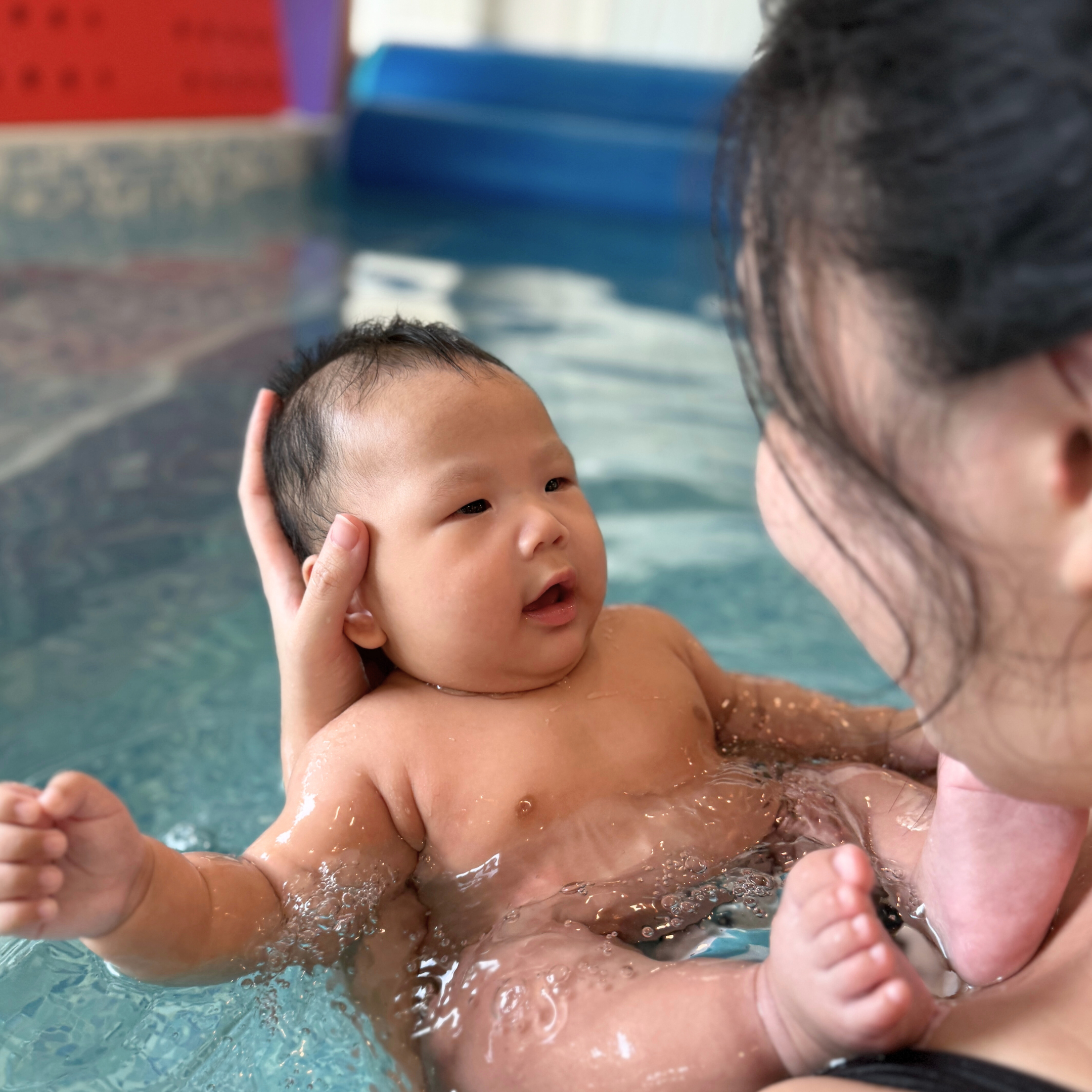
Parent participation is essential at this age. Skin-to-skin contact in water strengthens the emotional bond. It also builds your baby’s sense of safety and trust in the water.
2 – 6 Months: Building Water Confidence
Babies become more alert and physically responsive at this stage. They begin to kick their legs and engage with their environment. Structured aqua sessions help channel this energy positively.
Parent-infant aqua classes at this age lay the groundwork for independent swimming. The goal is building confidence and familiarity with water. This makes transitioning to formal lessons smoother later on.
6 Months and Beyond: Structured Swim Lessons
From 6 months, babies can begin more structured swimming programmes. They respond well to repetition and routine in the water. Many swim schools in Singapore offer progressive classes from this age.
The focus shifts toward breath control, floating, and basic propulsion. Always look for classes with a low student-to-instructor ratio. This ensures your baby receives adequate attention and guidance.
Top Benefits of Baby Swimming for Singapore Infants
Baby swimming offers a wide range of benefits beyond the pool. Here is why more Singapore parents are enrolling their infants:
- Improved motor development and muscle tone
- Better sleep patterns and reduced fussiness
- Enhanced sensory processing and body awareness
- Stronger parent-child bonding through shared activity
- Early water safety awareness from a young age
- Cognitive stimulation through movement and sensory input
- Boosted immune system through gentle physical exercise
Exclusive Partner Perk: Inspire Mum & Baby
| Special Discount Available for Confinement Angels customers We have partnered with Inspire Mum & Baby, one of Singapore’s child-centred swimming centre that supports early development to bring you an exclusive discount on their programmes. They are the only centre to provide baby swimming classes (from 2 months), complemented by a comprehensive range of services tailored for new mothers and their little ones. Please visit your membership page to claim the discount: 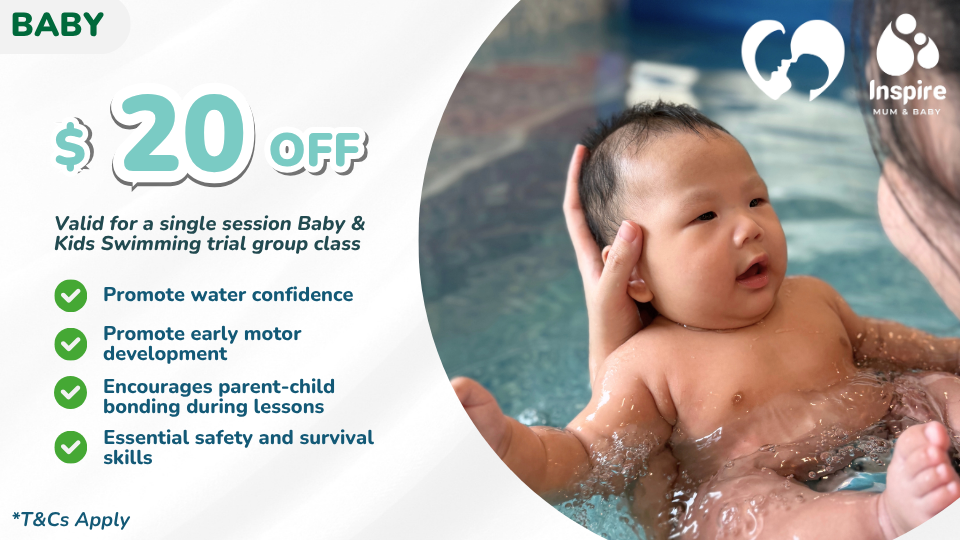 |
Final Thoughts: Is Baby Swimming Right for Your Child?
Baby swimming is safe, beneficial, and enjoyable when done with the right guidance. It supports your infant’s physical, cognitive, and emotional development from the very start.
Singapore parents have access to excellent infant aqua programmes tailored to each stage. Whether your baby is a newborn or already 6 months old, there is a class designed for them.
Always consult your paediatrician before enrolling your baby in any aqua programme. And when you are ready, take advantage of our exclusive partner discount with Inspire Mum & Baby.
References
Sigmundsson, H., & Hopkins, B. (2009). Baby swimming: Exploring the effects of early intervention on subsequent motor abilities. Child: Care, Health and Development, 36(3), 428–430.
American Academy of Pediatrics. (2010). Policy Statement: Prevention of Drowning. Pediatrics, 126(1), e253–e262.
Kjendlie, P.L., & Pedersen, A.V. (2016). Motor learning and swimming: A review. International Journal of Aquatic Research and Education, 10(2).
Health Promotion Board Singapore. (2023). Child Development Guidelines for Infants. HPB Singapore.