Finding greasy, yellow patches on your newborn’s scalp can be a “heart-sink” moment for any parent. You might wonder if you’ve missed a step in their hygiene or if they are having an allergic reaction. However, research shows that cradle cap (medical term: infantile seborrheic dermatitis) is common, harmless, and definitely not a reflection of your parenting. [1] This guide will show parents what to expect from cradle cap and the ways to treat it when happens.
What is Cradle Cap and Why Does it Happen?
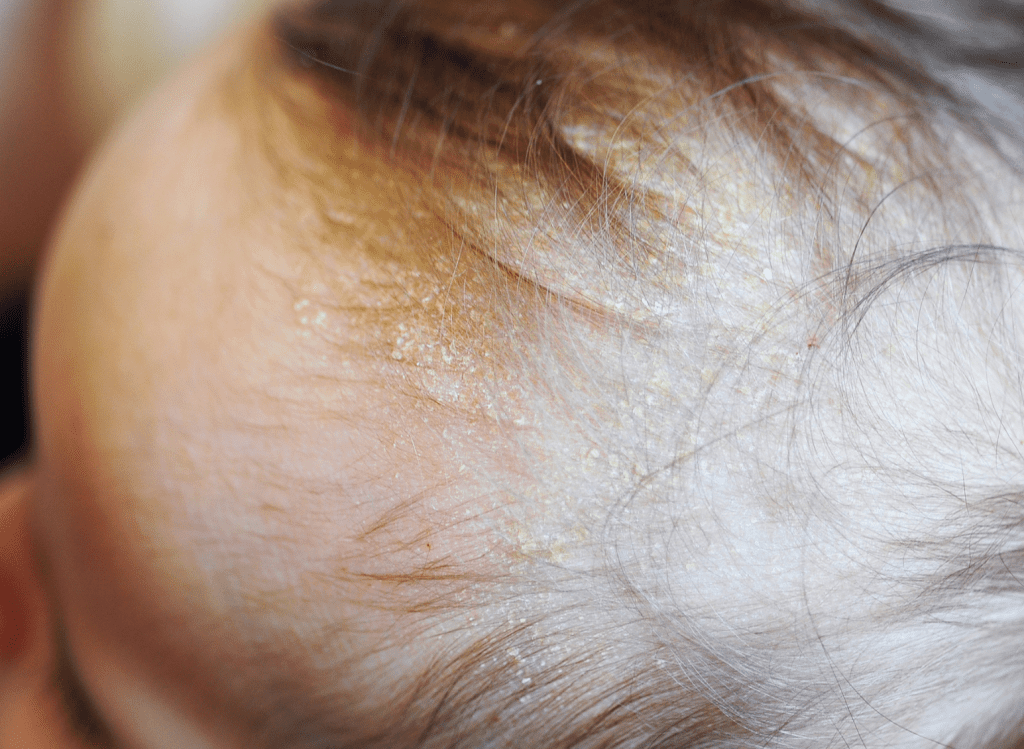
Cradle cap is a form of skin inflammation that causes thick, oily, yellowish scales. Unlike atopic dermatitis (eczema), cradle cap is typically non-pruritic (not itchy) and does not cause discomfort to the infant.
Causes of cradle cap
While the exact cause is still being studied, two primary factors are cited by medical experts:
- Maternal Hormones: Toward the end of pregnancy, hormones pass from the mother to the baby. These can overstimulate the baby’s sebaceous (oil) glands, leading to an overproduction of sebum (oil) that traps dead skin cells on the scalp. [2] [3]
- Malassezia Yeast: Recent clinical inquiries suggest that a common fungus called Malassezia grows in the sebum along with bacteria, which can trigger an inflammatory response in some infants. It is a type of yeast naturally lives on the skin, feeds on the excess sebum produced. [2] [3]
- Some minor cause could be also using too much shampoo or shampooing too frequently. This can lead to an oily scalp and hair, creating a “vicious cycle” of oil production.
Cradle cap is widely believed to be caused by a combination of, or interaction between, maternal hormones and Malassezia yeast.
Common misconception between cradle cap and eczema

Cradle cap (seborrheic dermatitis) and eczema (atopic dermatitis) are commonly confused infant skin conditions, but they differ primarily in sensation, texture, and location. Cradle cap is usually thick, greasy, yellow, and non-itchy (mostly limited to the scalp/face), whereas eczema is typically dry, red, and intensely itchy, often appearing in skin folds. [4]
- Cradle Cap: Is almost never itchy. Your baby will act perfectly normal and won’t try to scratch their head.
- Atopic Dermatitis: Is intensely itchy. If your baby is fussy, rubbing their head against their sheets, or trying to scratch, it is likely eczema, not cradle cap.
| Feature | Cradle Cap | Atopic Dermatitis (Eczema) |
| Color | Thick, greasy, yellow or brown scales, often on the scalp | Dry, scaly, red (or purple/gray on darker skin), and “rough” |
| Appearance | Thick “plates” of crust that look oily. | Flaky, dry skin that may look “angry” or cracked. |
| Location | Mostly the scalp, eyebrows, skin folds and behind ears. | Cheeks, outer arms, and legs (often avoids the diaper area). |
| Age of Onset | Between 2 weeks and 12 months old [3] | Can appear at any age |
Can You Actually Prevent Cradle Cap?
While you can’t control the hormones your baby was born with, you can prevent the buildup of scales so the condition never becomes severe.
What parents can do to treat cradle cap
- Apply Oil: Gently massage baby oil, mineral oil, or petroleum jelly onto the affected areas of the scalp. Let it sit for minutes to loosen the crusts.
- Wash Frequently: Shampoo the hair daily or every other day with a gentle baby shampoo.
- Medicated Shampoos: If regular shampooing doesn’t work, ask a doctor about using a mild anti-dandruff shampoo (Important: Please consult your GP when it is needed)
Important Notes
Never “pick” at dry scales with your fingernails. This can cause micro-tears in the skin, leading to secondary bacterial infections like Staphylococcus aureus (Staph) [5], which can lead to serious secondary infections, including cellulitis, abscesses, and pus-filled infections.
Why You Should Trust Confinement Angels Nannies
At Confinement Angels, we understand that your baby’s health is your top priority. While cradle cap is very common and non-contagious skin condition, managing it requires a delicate touch and a professional eye. We don’t just provide care; we provide specialized newborn expertise.
Every nanny needs to undergo in-house training and exam
Every Confinement Angels nanny undergoes a comprehensive training program that goes far beyond basic childcare. Our curriculum includes a specific module on neonatal condition, like cradle cap to ensure Confinement Angels nannies are equipped to handle.
Contact Confinement Angels to learn more
Hey parents! The first few weeks of parenthood should be about bonding, recovery, and joy, not worrying over newborn care. At Confinement Angels, we believe every parent deserves a professional partner who replaces worry with expertise, bringing true peace of mind to your confinement journey.
We are the first confinement nanny agency which has an in-house training centre with professionally-trained nannies in Singapore. So if you are looking for top-rated confinement nannies in Singapore, you need not look further. Did you know – Confinement Angels has been awarded as the Singapore’s Best Confinement Nanny in 2024! Besides that, our confinement nanny Singapore agency provides a holistic service with different experiences to mummy and daddy so that you can get prepared for your parenthood!
Postpartum recovery has never been this easy and stress-free with Confinement Angels Nanny Agency Singapore. So, get your FREE confinement consultation now!
P.S – Known as the celebrities’ choice, Confinement Angels provides parents with complete peace of mind and maximum comfort by attending to every single aspect 108-hour syllabus, before being subject to another round of stringent evaluation to determine if they are ready to be deployed for assignments. Because at Confinement Angels, we go above and beyond to bring you only the best. We have won the best confinement nanny agency in 2024 awarded by theAsianparent Parent Choice’s Singapore.
References
National Center for Biotechnology Information (NCBI): Seborrheic Dermatitis: Continuing Education Activity. An in-depth look at the prevalence of cradle cap in the first months of life. [1]
Mayo Clinic: Cradle Cap Symptoms and Causes. Clinical guidelines on identifying infantile seborrheic dermatitis and common triggers. [2]
KidsHealth (Nemours): Cradle Cap for Parents. Practical safety advice for home management and gentle scalp care for infants. [3]
HealthCentral: Cradle Cap vs. Eczema. A professional comparison to help parents distinguish between oily seborrheic scales and dry atopic dermatitis. [4]
Health New Zealand (Te Whatu Ora): Identifying Staphylococcus Skin Infections. Vital indicators for spotting secondary bacterial infections and “red flag” symptoms. [5]